Why Your Clothing Brand Needs a Brand Strategy
The fashion industry is one of the most competitive markets on the planet. Fast fashion giants like Zara, H&M, and Shein pump out thousands of new styles every week at rock-bottom prices. If your clothing brand does not have a clear reason to exist beyond selling clothes, it will get buried.
A brand strategy is not a logo or a color palette. It is the strategic foundation that defines who you are, what you stand for, who you serve, and how you show up in the market. It is the document your design team references when creating a new collection, the guide your copywriter follows when writing product descriptions, and the filter your marketing team uses when choosing which influencers to partner with.
Without a brand strategy, you are making decisions reactively. You chase trends instead of setting direction. You say yes to partnerships that do not align with your values. You end up with a brand that looks and sounds different on every platform. Customers notice that inconsistency, and they move on to brands that feel more intentional.
Fashion brands that build loyal followings all share one thing: a strategy that goes deeper than aesthetics. Patagonia built a movement around environmental responsibility. Everlane made radical transparency its entire identity. These brands did not stumble into their positioning. They defined it, documented it, and executed against it.
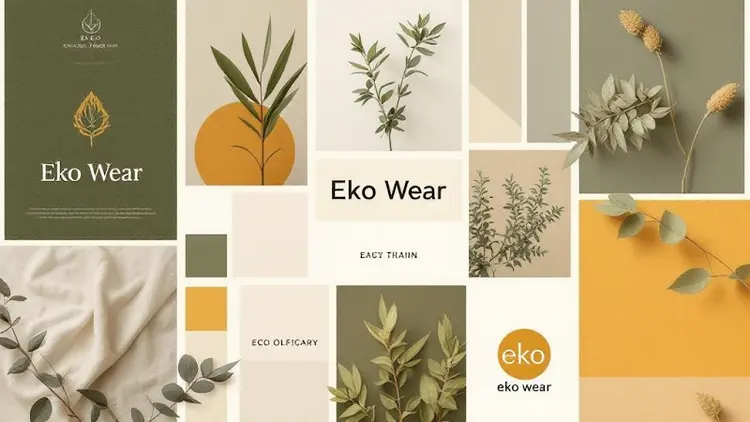
Throughout this article, we will reference a brand strategy deck created for EkoWear, a sustainable and eco-friendly fashion brand. Each section includes the actual strategy slide so you can see what a finished clothing brand strategy looks like in practice.
Define Your Brand Purpose
Your brand purpose answers the question: Why does your clothing brand exist beyond generating revenue?
In fashion, purpose matters more than ever. Consumers, especially younger ones, actively seek out brands that align with their values. A clothing brand that exists only to sell trendy pieces at a markup is not giving anyone a reason to choose it over the thousands of alternatives available online.
Your purpose could center on sustainability, body inclusivity, empowering artisans in developing countries, making luxury-quality basics affordable, or preserving traditional textile craftsmanship. The specifics depend on your founder story and what genuinely drives your brand. What matters is that it is real. Customers can spot performative purpose from a mile away.
A clear purpose also simplifies decision-making internally. When your team is debating whether to use a cheaper synthetic fabric or a more expensive organic alternative, your purpose answers that question before it becomes a debate.

EkoWear's purpose is to make eco-friendly fashion accessible to everyone, promoting sustainability and reducing waste. This is not a vague corporate statement. It is a clear commitment that shapes product sourcing, pricing strategy, and marketing messaging.
Set Your Brand Vision
Your brand vision describes the future state you are working toward. If purpose is your "why," vision is your "where." It paints a picture of the world your brand is trying to create.
For clothing brands, vision often connects to broader cultural or industry shifts. Maybe you envision a fashion industry with zero textile waste. Maybe you see a future where consumers buy fewer, better pieces. Your vision should be ambitious enough to inspire action but grounded enough to feel achievable over time.
A strong vision prevents short-term thinking. When a fast fashion collaboration opportunity lands on your desk with a big check attached, your vision helps you evaluate whether taking it moves you closer to or further from where you want to be.

EkoWear envisions a world where sustainable fashion is the norm and consumers embrace eco-friendly choices without sacrificing style or quality. That vision statement does two important things: it establishes the scale of ambition (industry-wide change) and it addresses a common objection (that sustainable fashion means compromising on aesthetics).
Establish Core Values
Core values are the non-negotiable principles that govern how your clothing brand operates. They are not words you put on your website and forget about. They are decision-making tools that your entire team should be able to reference daily.
In the fashion industry, core values carry particular weight because the supply chain is long and complex. Values around ethical sourcing determine which factories you work with. Values around quality determine your fabric selection and construction standards. Values around transparency determine how much you share about your pricing and production process.
Choose three to five values. Each one should be specific enough that it actually eliminates options. If a value does not help you say no to something, it is too vague to be useful.

EkoWear's core values are sustainability, innovation, and empowerment. These are not just words. Sustainability means minimizing environmental impact and promoting ethical sourcing at every stage. Innovation means constantly exploring new materials and production methods that reduce waste. Empowerment means helping customers feel good about their purchases and their impact on the planet.
Identify Your Target Audience
You cannot build a strong clothing brand by trying to dress everyone. The most successful fashion brands have a crystal-clear picture of their ideal customer and make every decision with that person in mind.
A solid target audience definition for a clothing brand goes beyond basic demographics like age and income. You need to understand your customer's lifestyle, values, shopping habits, media consumption, and what role fashion plays in their life. Are they trend-followers or trend-setters? Do they shop impulsively or research before buying? Do they care more about how clothes look on Instagram or how they feel in everyday life?
Psychographics are especially important in fashion because two people with identical demographics can have completely different relationships with clothing. A 30-year-old professional earning $80,000 might be a fast fashion shopper who buys weekly, or a conscious consumer who invests in five quality pieces per year. Your brand cannot speak effectively to both.

EkoWear targets young professionals, aged 20 to 40, who are environmentally conscious and stylish. These are people who read ingredient labels on their food and want to know where their clothes come from too. They are willing to pay a premium for products that align with their values, but they are not willing to sacrifice style. This specificity makes every subsequent branding decision easier.
Craft Your Brand Positioning
Positioning defines the space your clothing brand occupies in the customer's mind relative to competitors. In a market with thousands of options, you need a position that is both distinctive and defensible.
The fashion market broadly segments into fast fashion (high volume, low price, trend-driven), premium (higher quality, mid-range pricing), luxury (exclusivity, craftsmanship, premium pricing), and value-driven brands (mission-first, often sustainability or social impact focused). Your positioning determines which segment you compete in and how you differentiate within it.
Strong positioning requires trade-offs. You cannot be the cheapest and the most sustainable. You cannot be the most exclusive and the most accessible. Pick a lane and commit to it. The brands that try to be everything end up being nothing in particular.

EkoWear positions itself as fashionable, eco-friendly apparel that competes with mainstream brands like Zara and Gap, providing sustainable alternatives without sacrificing style. This is a deliberate positioning choice. EkoWear is not going after the luxury market or the ultra-budget segment. It is planting its flag in the mainstream space and saying: you can get the same styles you love, made responsibly, at a comparable price point.
Set Marketing Goals
Your brand strategy needs to translate into concrete marketing objectives. For clothing brands, marketing is where brand strategy meets commercial reality. Every dollar spent on marketing should move you closer to your strategic goals.
Fashion marketing has shifted dramatically in recent years. Traditional advertising and retail partnerships still matter, but the biggest opportunities for emerging brands are in direct-to-consumer (DTC) channels: your own website, social media, email marketing, and influencer partnerships.
Effective marketing goals for a clothing brand typically include:
- Build brand awareness within your target audience through strategic social media content
- Drive direct-to-consumer sales through your own e-commerce platform
- Develop influencer partnerships that align with your brand values and reach your ideal customer
- Create a community around your brand through content, events, and shared values
- Generate press coverage in fashion and sustainability publications

EkoWear's marketing strategy emphasizes collaborating with influencers in the sustainability and eco-friendly space. This is smart because it reaches an audience that already cares about the brand's core values. Rather than paying for broad reach, EkoWear invests in targeted partnerships with creators whose followers match the brand's ideal customer profile.
Define Brand Personality
Brand personality is the human character your clothing brand projects. It determines how your brand feels to interact with, whether someone is browsing your website, unboxing an order, scrolling through your Instagram, or reading a product description.
In fashion, brand personality shows up everywhere. It is in the styling of your lookbook photos. It is in the music playing in your pop-up shop. It is in the way your customer service team handles a return. It is in the tissue paper and thank-you card inside every shipment. Every touchpoint either reinforces or undermines your brand personality.
Define your personality with enough specificity that a new team member could read the description and immediately understand how to represent the brand. Generic traits like "modern" or "cool" are not helpful because they could describe almost any fashion brand. Get specific about what kind of modern, what kind of cool.

EkoWear projects an innovative, forward-thinking character while being empathetic, caring, and community-oriented. This combination is intentional. The innovation side speaks to the brand's commitment to new sustainable materials and production methods. The empathetic side speaks to its understanding of customers who want to do the right thing but do not want to feel lectured. It is the difference between guilt-tripping and gently inspiring.
Develop Tone of Voice
Tone of voice is how your brand personality translates into words. For a clothing brand, this covers everything from website headlines and product descriptions to social media captions, email subject lines, and care label instructions.
Your tone of voice guide should define where your brand falls on key spectrums: formal vs. casual, serious vs. playful, authoritative vs. approachable, technical vs. simple. It should also include examples of what your brand sounds like and what it does not sound like.
In fashion, tone of voice is especially important in product descriptions. A sustainable brand that describes a jacket as "this fire drop just hit" sends a completely different signal than one that says "crafted from 100% organic cotton, designed to last for years." Both approaches work, but they need to match the rest of the brand.

EkoWear's tone of voice is friendly and approachable, focused on inspiring and motivating people to make sustainable choices. Notice the word "inspiring" rather than "educating" or "convincing." EkoWear does not lecture its audience about environmental impact. It invites them to be part of something positive. That distinction in tone makes the difference between a brand people follow and a brand people scroll past.
Create a Brand Tagline
A tagline is a short phrase that captures your brand's essence in a memorable way. For clothing brands, the tagline often appears on hang tags, packaging, website headers, and social media bios. It should be concise, distinctive, and tied to your positioning.
Good fashion taglines do one of three things: they communicate the brand's unique value proposition, they evoke an emotion, or they challenge a convention. The best ones do two of these simultaneously.
Avoid taglines that could apply to any brand in your space. If you could swap your brand name for a competitor's and the tagline still works, it is not specific enough. Your tagline should be so connected to your brand's positioning that it could only belong to you.

EkoWear's tagline is "Where Style Meets Sustainability." It directly addresses the biggest objection their target audience has: that sustainable fashion means giving up style. The tagline promises that with EkoWear, you do not have to choose. It is simple, memorable, and perfectly aligned with the brand's positioning.
With all ten elements defined, from purpose through tagline, you have a complete brand strategy deck. This document becomes the north star for every decision your clothing brand makes, from selecting fabrics and designing collections to choosing retail partners and planning marketing campaigns.
Key Takeaways
- Strategy comes before design. Define your purpose, audience, and positioning before choosing fabrics, colors, or logos.
- Pick a specific target audience. A clothing brand that tries to dress everyone ends up resonating with no one.
- Positioning requires trade-offs. You cannot be the cheapest, the most sustainable, and the most exclusive at the same time.
- Brand personality shows up in every touchpoint, from lookbook styling to packaging materials to Instagram captions.
- Tone of voice matters in fashion. How you describe a product shapes how customers perceive its value.
- Use AI tools like Brand Strategist AI to build a professional clothing brand strategy deck in minutes, not months.
Build Your Clothing Brand Strategy
Brand Strategist AI walks you through every step and generates a professional strategy deck for your fashion brand automatically. No branding experience needed.
Try Brand Strategist AI FreeFrequently Asked Questions
What should a clothing brand strategy include?
A clothing brand strategy should include your brand purpose, vision, core values, target audience profile, brand positioning, marketing goals, brand personality, tone of voice, and a tagline. These elements work together to guide every decision from product design and sourcing to marketing campaigns and retail experience.
How much does it cost to brand a clothing line?
Hiring a branding agency to develop a clothing brand strategy typically costs between $10,000 and $100,000+, depending on the scope and the agency. AI-powered tools like Brand Strategist AI let you build a professional brand strategy deck for a fraction of that cost, making it accessible for independent designers and emerging fashion labels.
How do I differentiate my clothing brand from fast fashion?
Differentiation starts with your brand positioning. Focus on what fast fashion cannot replicate: ethical sourcing, sustainable materials, quality craftsmanship, limited production runs, transparent supply chains, or a strong community mission. A clear brand strategy helps you identify and communicate these differentiators consistently across every touchpoint.
Can I use AI to create a brand strategy for my clothing brand?
Yes. AI brand strategy tools guide you through defining your purpose, vision, target audience, positioning, and personality in minutes. You get a professional strategy deck that serves as the foundation for all branding decisions, from lookbook direction and social media voice to packaging design and retail experience.